

When you’re on the hunt for a new apartment, the goal is to find a place that best fits your needs and lifestyle. Living in Boston means you’ll have plenty of options, but touring apartment complexes can quickly become overwhelming.
How can you choose between different apartment types? Is it better to pick a high-rise full-service building or go for a historic brownstone in a tree-lined block? Let’s take a look at the main pros and cons of choosing brownstones vs full-service buildings.
Pros and cons of brownstone buildings
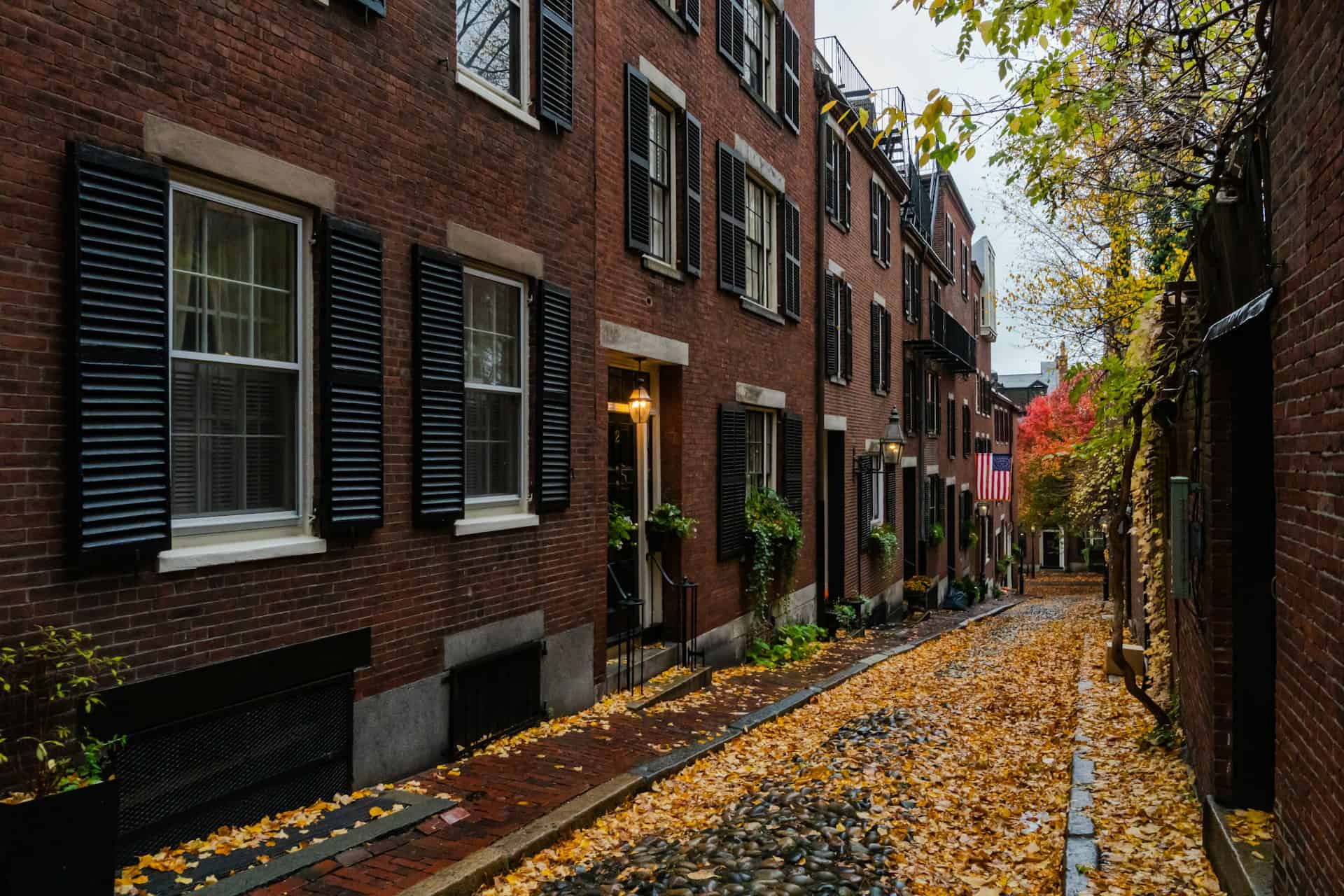
There’s a reason many fictional TV characters live in beautiful brownstone buildings – there’s a charm to them that simply can’t be matched! That charm is rooted not just in their looks but in their rich history. Most of the brownstone buildings in Boston date back to the 19th century and were made from sandstone (back then, a popular material) with a brown coloration.
So, what is the advantage of living in a historic home? It’s the beautiful aesthetics, of course.
Buildings like these often feel like intricate works of art – think dramatic doorways, gorgeous tall windows, and palatial ceilings. You’ll notice accents inspired by Romanesque Revival, Neo-Grec, and other styles, and many of the homes have romantic touches throughout.
One of the biggest perks of living in a brownstone is the sense of privacy and individuality – no two units feel exactly alike. Many also come with rare outdoor spaces, whether that’s a small backyard, private patio, or roof deck.
Of course, owning a 200-year-old brownstone apartment also comes with its drawbacks, most importantly, high maintenance and repair costs. If the previous owners cut corners, you might be stuck handling expensive upkeep. In fact, historic home renovations come with a higher price tag, as they often require city permits and skilled contractors.
You should also be prepared that older brownstones may not come with modern amenities. While some buildings have received a ‘facelift’ in recent years, most of them still aren’t equipped with an elevator, central air, or soundproof windows.
Advantages and disadvantages of full-service buildings?
In the last few decades, luxury high-rises and full-service buildings have become increasingly popular, and rightfully so. Living in one often means greater sociability and access to amenities that older buildings simply can’t offer. And if it’s sweeping views you’re after, you’re in for a treat: many of these properties overlook Boston or the water, depending on their location.
Beyond the views and social atmosphere, what truly sets full-service buildings apart is the next-level convenience they offer. Most feature a concierge (sometimes accompanied by a doorman), a club room, a fitness room or facility, and, in some cases, access to a pool, media room, private restaurants, and garage parking, which is especially important for those still transitioning to city life. Unlike in brownstones, you don’t have to worry about hauling baby strollers, groceries, or luggage, because elevators are part of the building.
However, all of these perks don’t come for free. To get access to all the amazing amenities, you’ll most likely have to pay a higher monthly fee. Likewise, some full-service buildings can feel generic and impersonal. But with a little effort and personal style, they can feel just as inviting and homey!
That’s the beauty of living in Boston – you always have a wealth of opportunities, and that includes real estate. At The Sarkis Team, we’ll gladly help you find your dream home – be it a brownstone or a full-service building apartment. Browse through our listings here or contact our team today to find your peaceful oasis.
FAQ
Are brownstone apartments typically in historic districts or landmarks?
Yes. Many brownstones in Boston fall within historic districts or are part of landmarked areas. This means renovations often require special permits to preserve architectural integrity.
Do brownstones offer better investment potential than high-rise condos?
Brownstones can be great long-term investments due to their uniqueness and historic value, though high-rises tend to offer more stable returns.
How much are typical monthly fees or HOA dues in full‑service buildings?
HOA fees in luxury full-service buildings can range from $900-$5,000, depending on amenities, services, and location. Be sure to do research on cost and what the fee offers before purchasing a condo!

Social Media